
Share the page
Eurasia and Beyond
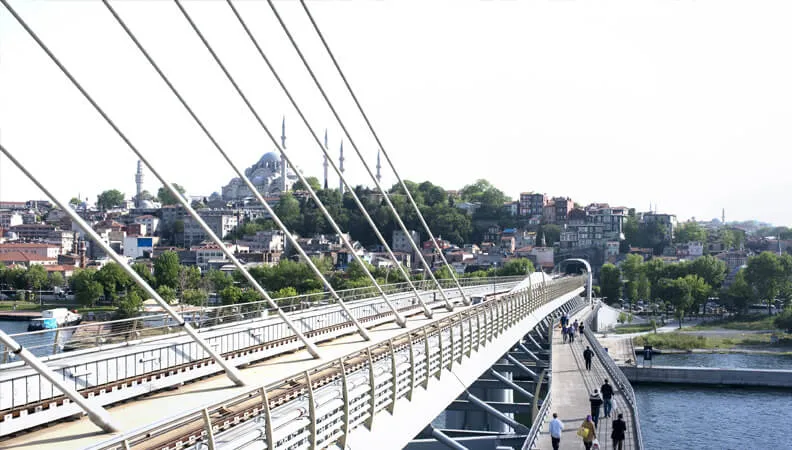
From the Western Balkans to the Indo-Pacific, and including the Near East and Central Asia, the region covers countries with diverse development trajectories. The Eastern European and Asian regions play a key role in the response to global challenges, yet their resilience has been undermined by the crises. They now need to develop more sustainable and inclusive economic and social models. AFD Group’s action in Eurasia and beyond aims to support low-carbon trajectories, strengthen social cohesion and reduce vulnerabilities, by mobilizing French and international actors.
Context
Countries in Asia and the Middle East are characterized by the diversity of their development trajectories. Asian countries are faced with the major internal challenges of redressing the balance between regions and the transition towards a model based on the middle classes and domestic demand. In China, the new Silk Road (Belt and Road Initiative – BRI – strategy), could in the future reinforce links across the sub-regions. In the Near and Middle East, the social and political integration of young people and women is now more than ever essential to the development and stability of the region.
To support countries in the region, AFD Group engages in dialogue and sharing models and mutual experiences. The objective of the Group’s action is to contribute to strengthening social cohesion, by reducing inequality and fulfilling the social protection expectations of the middle classes. We also support transitions towards low-carbon models, the protection of ecosystems and biodiversity, and the promotion of sustainable cities to facilitate the implementation of the Paris Agreement.
Our approach
AFD Group in Eurasia and beyond: Supporting sustainable development trajectories
Stretching from the borders of the European Union to the heart of Asia, the Enlargement and European Neighborhood Regional Department covers a wide geographic area made up of four subregions: the Western Balkans, Türkiye, the South Caucasus including Azerbaijan, Armenia, and Georgia, as well as Moldova and Ukraine. Although the countries in this area have diverse socioeconomic contexts, they face shared environmental, social, and demographic challenges. In Eurasia, AFD Group supports efforts to combat climate change and promotes transitions that are more just and inclusive.
Learn more about the Enlargement and European Neighborhood Regional Department.
In the Middle East, AFD Group’s action aims to identify and promote sustainable development pathways to mitigate vulnerabilities that compromise the future of next generations. The Middle East Regional Office manages and supports the Group's activities in Iraq, Jordan, Lebanon and Palestine, and monitors the situation in Syria and Yemen, two countries where AFD no longer operates.
From Afghanistan in the West to Bangladesh in the East, bordered by the Himalayas in the North and the Indian Ocean in the South, South Asia covers a wide range of geographical, political and economic conditions. AFD Group supports South Asian countries ((Afghanistan, Bangladesh, India, Pakistan and Sri Lanka) in their efforts to achieve the Sustainable Development Goals. AFD's priorities for action are in line with France's policy in the Indo-Pacific region and contribute to the fight against climate change and the promotion of gender equality.
China, with the world’s largest population and second largest economy, is also one of the most biodiverse countries on the planet. However, rapid growth has had an impact both on the environment and the quality of life of its inhabitants. AFD has been developing cooperation actions with the Chinese authorities since 2004 in terms of sustainable development and the fight against climate change. Our projects mobilize French expertise and know-how to support China's transition to a low-carbon, environmentally friendly economy.
In addition to China, the Central and Eastern Asia Regional Department covers Mongolia, Kazakhstan, and Uzbekistan.
Southeast Asia is a region of opportunities and challenges. Although there are marked linguistic, religious, political, economic and geographical contrasts, common dynamics are emerging in relation to the vulnerability of these territories to climate change, biodiversity loss and increasing inequalities. The Southeast Asia Regional Office supports the region in its transitions and catalyzes projects and partnerships at regional level in seven countries, all members of ASEAN: Myanmar, Cambodia, Indonesia, Laos, Philippines, Thailand and Vietnam.
In the field
Projects


News & Press Releases
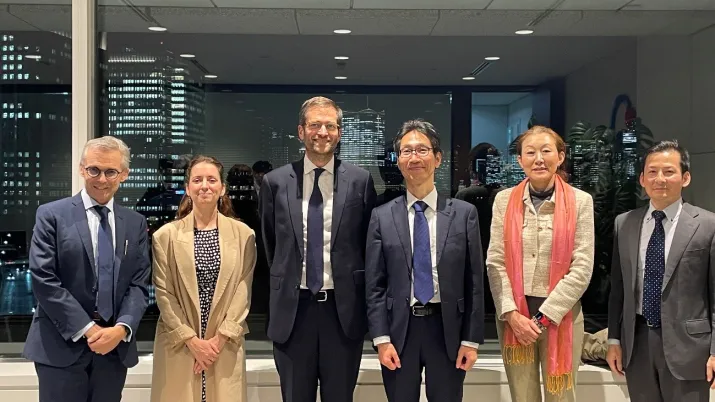
14th AFD-JICA Regular Dialogue Held in Tokyo: Strengthening Strategic Partnership for the Future of Developmen...
Published on November 6, 2025
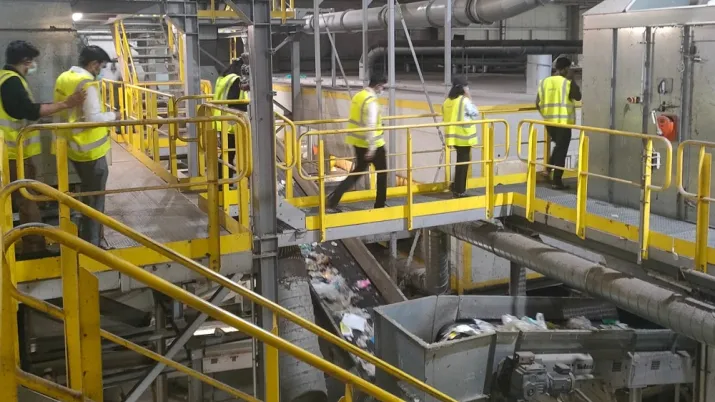
From Delhi to Paris: India on the path to resilient urban waste management
Published on July 25, 2025
Publications & Media

Key figures
-
3.5 billion euros committed in 2021
-
32 countries of operation with 5 regional divisions (Eurasia, Middle East, Near East, China, South Asia, Southeast Asia)
-
Almost €12.3 billion in financing in the Orients between 2016 and 2020, of which €7.8 billion had a climate impact (mitigation or adaptation)